
Stem Cell Supplements
Stem cell supplements are dietary supplements marketed to support normal stem cell function, circulation, cellular communication, or the body’s natural renewal processes. They are not stem cell therapy, do not contain a medical stem cell treatment, and should not be presented as a replacement for medical care.
The category can be confusing because phrases such as “stem cell support” and “stem cell activation” sound similar to regenerative medicine terminology. Before comparing products, look at the actual supplement ingredients, label claims, serving instructions, manufacturer information, and evidence used to support the marketing.
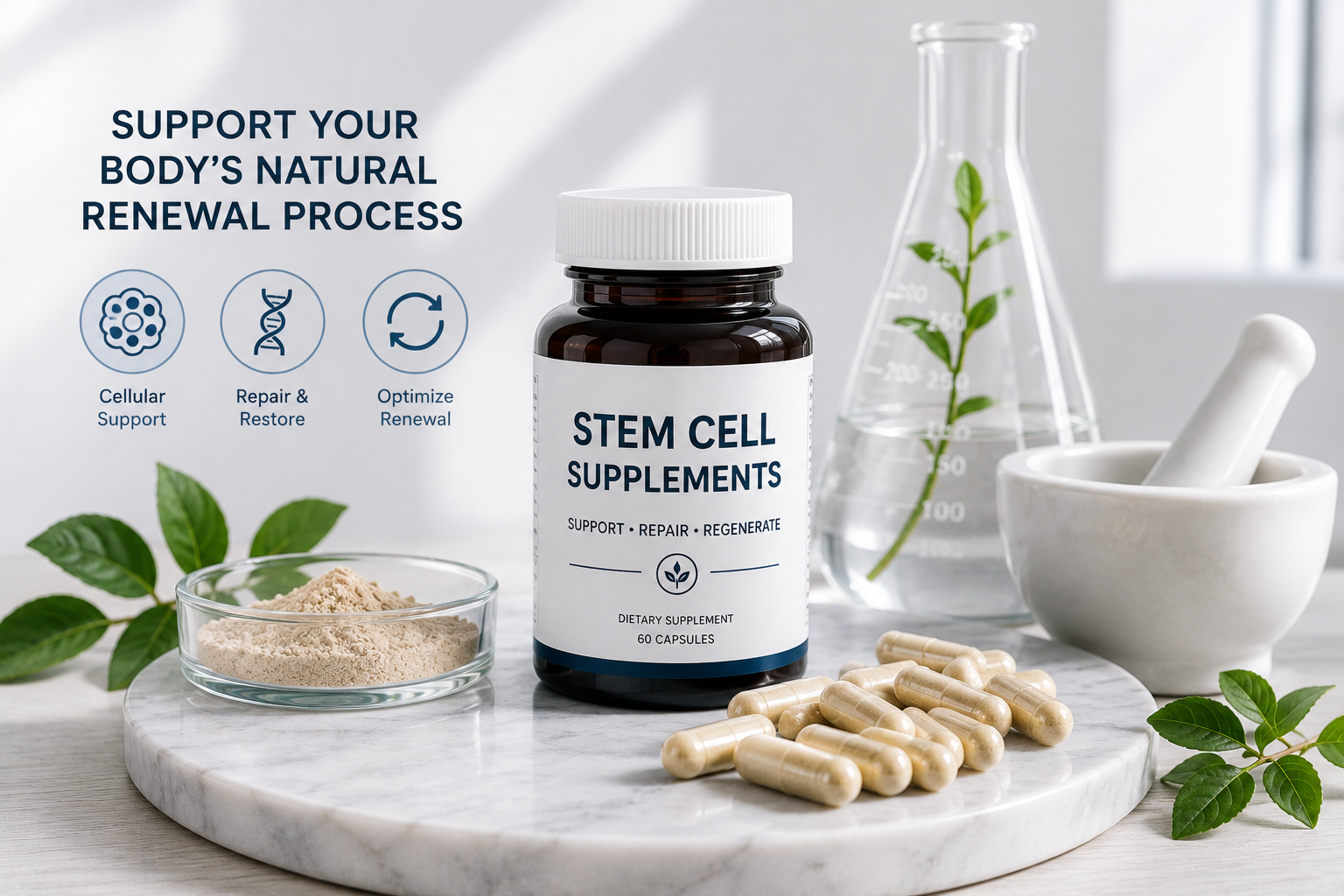
Quick answer: Stem cell supplements are dietary supplements, not stem cell treatments. Products in this category may use structure/function language about supporting normal body processes, but dietary supplements are not FDA-approved before sale in the same way as prescription drugs.
What Are Stem Cell Supplements?
Stem cell supplements are supplements marketed around the idea of supporting the body’s normal stem cell-related processes. Depending on the product, the manufacturer may focus on circulating stem cells, cellular signaling, microcirculation, or general tissue health.
That language needs to be understood in the context of dietary supplement regulation. The U.S. Food and Drug Administration explains that dietary supplements are regulated differently from drugs and are not approved by the FDA before being sold to the public. Manufacturers and distributors are responsible for ensuring that their products are safe and that labeling is truthful and not misleading.
Dietary supplement labels may use certain structure/function claims. These claims can describe how a nutrient or ingredient is intended to affect the normal structure or function of the body. When applicable claims appear on supplement labeling, federal law requires the familiar disclaimer explaining that the statement has not been evaluated by the FDA and that the product is not intended to diagnose, treat, cure, or prevent disease.
Important distinction: A stem cell support supplement is not a stem cell injection, stem cell transplant, or exosome product. Our stem cell therapy cost guide covers medical and regenerative procedures separately.
How Are Stem Cell Supplements Supposed to Work?
There is no single mechanism shared by every product marketed as a stem cell supplement. The explanation depends on the ingredients and claims associated with the specific formula.
Some supplement companies use language about supporting the natural release of stem cells into circulation. Others focus on cellular communication or microcirculation. A multi-product system may assign a different support role to each formula.
These are structure/function concepts and should not be rewritten into disease-treatment promises. “Supports normal cellular communication” is a fundamentally different claim from saying that a supplement treats arthritis, repairs an injured organ, reverses a neurological disease, or cures a medical condition.
When evaluating a product, read the exact label and manufacturer claims rather than assuming the phrase “stem cell supplement” proves a particular medical outcome.
What to Look for in a Stem Cell Support Supplement
Marketing names are not enough to compare supplements. Review the product information in the same way you would evaluate another dietary supplement.
- Supplement Facts panel — identify the listed ingredients and serving size.
- Exact label claims — look at what the manufacturer actually says the formula supports.
- Manufacturer transparency — the company should clearly identify the product and provide label information.
- Serving instructions — compare the recommended use rather than only the number of capsules in a bottle.
- Warnings — review pregnancy, medication, allergy, and other cautions on the label.
- Claim language — be cautious when supplement marketing shifts from supporting normal function to claiming treatment or cure of disease.
- Evidence — ask whether marketing claims are supported by evidence relevant to the ingredient, formula, dose, and claimed benefit.
- Total protocol — determine whether the company markets one supplement or expects several products to be used together.
The Federal Trade Commission states that health-related product claims must be supported by appropriate substantiation. Emerging or limited science should not be presented with more certainty than the evidence supports.
Stem Cell Supplements vs Stem Cell Therapy
Stem cell supplements and stem cell therapy are not interchangeable.
Stem cell supplements are dietary supplements. They are swallowed or otherwise used according to supplement labeling and are marketed to support normal body functions.
Stem cell therapy is a broad medical and regenerative medicine term. It can refer to established hematopoietic stem cell transplantation or to private-clinic procedures marketed as regenerative treatments. The regulatory, medical, and financial questions are completely different.
A bottle labeled for “stem cell support” does not contain a stem cell transplant. Likewise, taking a dietary supplement should not be described as receiving stem cell therapy.
If you are researching procedures rather than supplements, see our stem cell injection cost guide. For products marketed around extracellular vesicles, our exosome therapy cost guide explains the separate regulatory concerns surrounding exosome products.
Types of Stem Cell Support Supplement Claims
Products in this category may be positioned around several different support concepts. The wording varies by manufacturer.
Stem Cell Release Support
Some formulas are marketed to support the body’s natural release of stem cells into circulation. STEMREGEN® Release is an example of a dietary supplement marketed around stem cell release and migration support.
When reviewing a release-focused supplement, examine the Supplement Facts panel and the exact claims made by the manufacturer. Do not automatically translate “support” language into a promise that the product will repair a specific injury or treat a disease.
Cellular Signaling Support
Other products focus on cellular communication. STEMREGEN® Signal is marketed as a proprietary blend of plant extracts designed to support stem cell communication and tissue health.
Cell signaling is a broad biological concept. A supplement claim about supporting normal communication should not be treated as proof that the product can direct stem cells to cure a particular condition.
Mobilization and Circulation Support
Some formulas are marketed around microcirculation or mobilization. These products may be positioned as part of a broader supplement protocol rather than as standalone therapy.
As with any dietary supplement, the relevant questions are what ingredients are included, what normal body function the company says they support, and whether the claim is truthful and appropriately substantiated.
Multi-Product Stem Cell Support Protocols
Some companies combine several dietary supplements into a protocol. STEMREGEN markets protocols that combine products such as Release, Signal, and Mobilize around different support functions.
A protocol can make the purchasing decision more complicated because the consumer is evaluating several formulas and a combined serving schedule. Review each individual label and the complete protocol instructions before use.
StemRegen Stem Cell Support Supplements
One of the brands consumers encounter when researching stem cell supplements is STEMREGEN®. The company markets several dietary supplements around different stem cell support concepts.
The product line includes Release, Release Sport, Mobilize, and Signal. STEMREGEN also offers bundled protocols that combine products into a broader supplement routine.
We review the brand separately in our StemRegen review. That page looks at the product line, the company’s claims, and the differences between the individual formulas.
Want to see the product line? You can view all StemRegen products. This is an affiliate link, which means StemTherapyCost.com may earn a commission if you make a purchase through the link at no additional cost to you.
Are Stem Cell Supplements FDA Approved?
Dietary supplements are not FDA-approved before they are marketed in the same way as prescription drugs. The FDA explains that most dietary supplements can enter the market without premarket approval and that companies are responsible for product safety and truthful labeling.
This is different from saying the FDA has no authority over supplements. The agency regulates dietary supplements under federal food law and can take action involving adulterated or misbranded products.
Structure/function claims also have specific requirements. The FDA explains that these claims are not pre-approved, but manufacturers must have substantiation that the claims are truthful and not misleading. Applicable supplement labeling must carry the required disclaimer.
Be cautious if a seller uses “FDA approved” to describe a dietary supplement. Ask exactly what approval is being claimed.
Can Stem Cell Supplements Treat Medical Conditions?
Dietary supplements should not be marketed as products intended to diagnose, treat, cure, or prevent disease. Those are drug claims.
A supplement company may make appropriately supported structure/function claims about normal body processes. That does not mean consumers or affiliate publishers should turn those claims into disease-treatment statements.
For example, a manufacturer claim that an ingredient supports normal cellular function should not be rewritten as “repairs damaged joints.” A claim about circulation support should not become a promise to reverse cardiovascular disease.
If you have a medical condition, are receiving cancer treatment, have an autoimmune condition, take prescription medication, are pregnant, or are planning a medical procedure, discuss supplement use with an appropriate healthcare professional.
How to Compare Stem Cell Supplements
Use the same questions when comparing products:
- What are the exact ingredients?
- What is the serving size?
- What claims appear on the label or official product page?
- Are the claims about supporting normal function or treating disease?
- Does the manufacturer explain the role of the formula?
- Is the product intended to be used alone or as part of a protocol?
- What warnings appear on the label?
- Are there potential medication or supplement interactions to discuss with a healthcare professional?
- Does the company provide evidence relevant to the claims being made?
- What is the refund or return policy?
Do not choose a product solely because its name includes “stem cell.” The ingredient list and actual claims are more useful than the category label.
Stem Cell Supplement Safety Considerations
“Natural” does not automatically mean appropriate for every person. Dietary supplement ingredients can cause side effects, trigger allergies, or interact with medications and other supplements.
Read the complete label before use. Follow the labeled serving instructions unless a qualified healthcare professional gives you different advice based on your individual situation.
Tell your healthcare professionals about supplements you use. This can be especially important before surgery or procedures and when taking prescription medication.
If you experience a serious reaction or unexpected symptom after taking a supplement, stop using the product and seek appropriate medical care. The FDA also maintains a reporting system for adverse events involving FDA-regulated products.