
Exosome Therapy Cost
Exosome therapy cost can vary widely because clinics may use the term “exosome therapy” for different products, routes of administration, treatment areas, and packages. A scalp procedure, a service marketed for skin or aesthetic use, and an intravenous product should not automatically be compared as though they are the same treatment.
There is also an important regulatory issue to understand before comparing quotes. The U.S. Food and Drug Administration states that there are currently no FDA-approved exosome products. For that reason, the first question should not be which clinic advertises the lowest exosome therapy cost. The first question should be exactly what product is being offered and what regulatory status the provider claims for its proposed use.
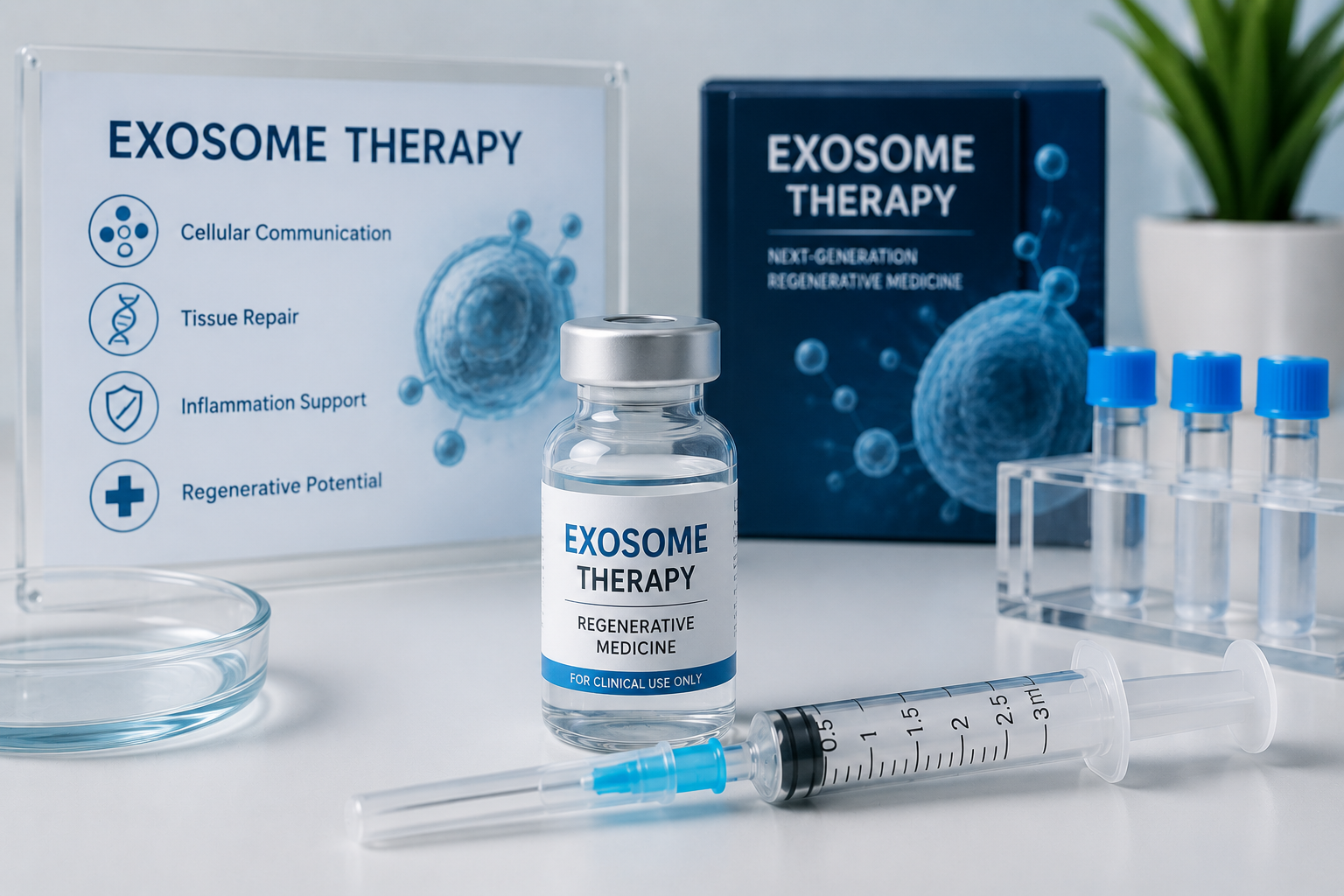
Quick answer: There is no universal exosome therapy cost. The product, source, route of administration, treatment area, number of sessions, provider, and follow-up plan can all affect a quote. The FDA states that there are currently no FDA-approved exosome products.
How Much Does Exosome Therapy Cost?
The most useful answer is that exosome therapy cost depends on what the clinic is actually offering. “Exosome therapy” is not a standardized consumer service with one uniform product, dose, procedure, or treatment schedule.
Exosomes are extracellular vesicles involved in communication between cells and are an active area of scientific research. Consumer marketing, however, can move faster than established clinical evidence and regulatory approval. The FDA has warned consumers about regenerative medicine products marketed with claims involving exosomes and says exosome products intended to treat diseases or conditions in humans require FDA approval.
Because the FDA states that no exosome products are currently approved, consumers should be cautious when a clinic describes an exosome product as “FDA approved.” Ask the provider to identify the exact product and approval it is claiming.
From a cost perspective, two quotes may describe completely different services. One may involve a local procedure in a clinic. Another may be an intravenous administration. A hair-focused provider may recommend multiple scalp sessions. An aesthetic practice may bundle an exosome-related product with another procedure. The advertised numbers are not meaningful until the services are separated.
Before paying: Ask for the exact product name, source, manufacturer, route of administration, proposed use, and regulatory status in writing. Do not assume that “regenerative,” “cell-derived,” or “next-generation” means FDA-approved.
What Affects Exosome Therapy Cost?
Most differences in exosome therapy cost come from the product and treatment plan being marketed. Important factors can include:
- Product being offered — ask the clinic to identify the exact exosome product rather than using only a general treatment label.
- Source of the product — providers may describe different biological or cellular sources.
- Route of administration — intravenous administration, local procedures, scalp applications, and other approaches are not equivalent services.
- Treatment area — a focused treatment area may be structured differently from a broader procedure.
- Number of sessions — one visit should not be compared with a multi-session package.
- Additional procedure — some clinics combine exosome-related products with microneedling, laser procedures, injections, or other services.
- Provider and facility fees — the clinic setting and clinician can affect the total quote.
- Consultation and testing — evaluation or laboratory work may be separate charges.
- Follow-up care — ask whether reassessment is included.
- Travel — treatment away from home can add lodging, transportation, and return-visit expenses.
An itemized quote is especially important when comparing exosome therapy cost because the broad treatment label does not tell you what product, procedure, or schedule is included.
Exosome Hair Therapy Cost
Exosome hair therapy is marketed by some clinics as a scalp or hair-focused service. The way these services are structured can vary. A provider may offer an exosome-related product as part of a standalone scalp procedure or combine it with microneedling, PRP, or another service.
When comparing exosome hair therapy cost, ask whether the quote covers one session or a series and whether another procedure is bundled into the price. Also ask exactly how the product is applied or administered and what product the clinic uses.
Do not assume that a hair-focused exosome service has FDA approval. The FDA’s consumer alert states that there are currently no FDA-approved exosome products.
If you are comparing a clinic’s exosome plan with platelet-rich plasma, see our PRP hair therapy cost guide. PRP is prepared from a patient’s own blood and should not be treated as the same product or procedure as an exosome service.
Exosome IV Therapy Cost
Some regenerative medicine businesses market intravenous exosome products. For an IV service, ask the provider to identify the exact product, source, manufacturer, and proposed use before discussing price.
The FDA warns consumers about unapproved regenerative medicine products and has specifically stated that no exosome products are currently FDA-approved. If a provider says an IV exosome product is being administered as part of an FDA-authorized clinical investigation, ask for the investigational new drug application number and verify the information with the FDA.
For the financial side of an IV quote, ask whether the amount includes consultation, testing, product administration, facility charges, monitoring, and follow-up. If multiple infusions are recommended, request the complete schedule and total financial obligation in writing.
A low per-infusion price does not explain the full cost if the clinic recommends a series or adds separate evaluation and facility charges.
Exosome Therapy Cost for Skin and Aesthetic Services
Exosome terminology also appears in aesthetic and skin-care marketing. The regulatory category can depend on the product, intended use, claims, and how it is administered. A topical cosmetic and a product marketed to treat a disease or condition should not automatically be discussed as though they have the same regulatory pathway.
From a cost standpoint, aesthetic clinics may bundle an exosome-related product with microneedling, laser treatment, or another procedure. Ask the clinic to separate the base procedure from the exosome add-on so you can understand what each part of the quote represents.
Also ask whether the product is applied topically or administered in another way. Vague language such as “exosome facial” or “regenerative skin treatment” may not provide enough detail to compare providers.
Does Insurance Cover Exosome Therapy?
Do not assume that an exosome service will be covered by insurance. Coverage depends on the exact product, procedure, indication, provider, and health plan. The FDA states that there are currently no FDA-approved exosome products, which is a major consideration when evaluating therapeutic services marketed directly to consumers.
Ask the clinic for the exact billing information and contact the insurer directly. If a provider says the service is “reimbursable,” “insurance eligible,” or can be submitted to insurance, ask whether that means the health plan has actually agreed to cover the proposed product and procedure.
Related services may be handled separately. A medical consultation, laboratory test, or other service should not be assumed covered or excluded solely because it occurs around an exosome-related procedure.
Verify before treatment: Get the exact product and procedure information from the clinic, then ask your health plan about that specific service. General statements about “regenerative medicine coverage” are not enough.
Exosome Therapy Cost vs Stem Cell Therapy Cost
Exosomes and stem cells are not the same thing. Exosomes are extracellular vesicles involved in cell-to-cell communication. Stem cells are cells with characteristics that allow self-renewal and, depending on the cell type, differentiation.
Marketing can blur those categories, especially when clinics use phrases such as “stem cell-derived exosomes.” That does not make an exosome product the same as a stem cell transplant or other stem cell procedure.
The cost structures can also differ. A procedure marketed as stem cell therapy may involve cell or tissue collection, processing, and administration. An exosome service may involve a separately manufactured or sourced product and a clinic procedure. The details of each plan need to be identified before comparing quotes.
Our main stem cell therapy cost guide explains the broader cost factors and regulatory questions surrounding services marketed as stem cell therapy. For injection-based procedures, see our stem cell injection cost guide.
How to Compare Exosome Therapy Cost Quotes
Use the same questions with every provider. The goal is to identify what is actually being sold before comparing the financial terms.
- What is the exact name of the exosome product?
- Who manufactures or supplies the product?
- What is the source of the product?
- How is the product administered or applied?
- What condition or purpose is the clinic proposing it for?
- Is the clinic claiming that the product or use is FDA-approved?
- If so, what is the exact approval and indication?
- If the clinic says it is part of an FDA-authorized investigation, what is the IND number?
- Is the quote for one session or a complete treatment series?
- Is another procedure bundled with the exosome product?
- Are consultation, testing, facility fees, and follow-up included?
- What additional charges could occur?
- What is the cancellation or refund policy?
- Who manages complications or urgent concerns after the procedure?
If the provider cannot clearly identify the product or explain its regulatory status, price comparison should not be the next step.
Regulatory and Safety Questions to Ask
The FDA has issued both a consumer alert and a public safety notification involving exosome products. The agency has warned about unapproved products and reports of serious adverse events associated with certain products marketed as exosomes.
Ask the provider how the product is sourced, tested, stored, and handled. Ask what adverse events are discussed during informed consent and what the clinic’s process is if a patient experiences a complication.
Be cautious with claims that an exosome product can treat or cure a long list of unrelated diseases or conditions. The FDA specifically warns consumers about misleading information surrounding regenerative medicine products.
Also be careful with regulatory phrases that sound official but do not answer the approval question. Facility registration, manufacturer registration, or statements that a product is “compliant” are not the same as FDA approval of an exosome product for a specific therapeutic use.
A provider should be able to answer direct questions without replacing the answer with testimonials, broad wellness language, or urgency to purchase a package.
Frequently Asked Questions
How much does exosome therapy cost?
Are exosome products FDA-approved?
Does insurance cover exosome therapy?
Is exosome therapy the same as stem cell therapy?
How should I compare exosome therapy quotes?
Sources and Further Reading
- FDA: Consumer Alert on Regenerative Medicine Products Including Stem Cells and Exosomes
- FDA: Public Safety Notification on Exosome Products
- FDA: Important Patient and Consumer Information About Regenerative Medicine Therapies