
PRP Hair Therapy Cost
PRP hair therapy cost can vary because scalp PRP is usually priced around a treatment plan, not just one appointment. The provider, number of sessions, scalp treatment area, blood-processing method, follow-up schedule, and whether maintenance visits are recommended can all affect the total cost.
Before comparing quotes, confirm whether the clinic is pricing one PRP hair session, an initial series, or a longer plan that includes follow-up or maintenance. A low single-session price may not tell you what the full treatment plan will cost.
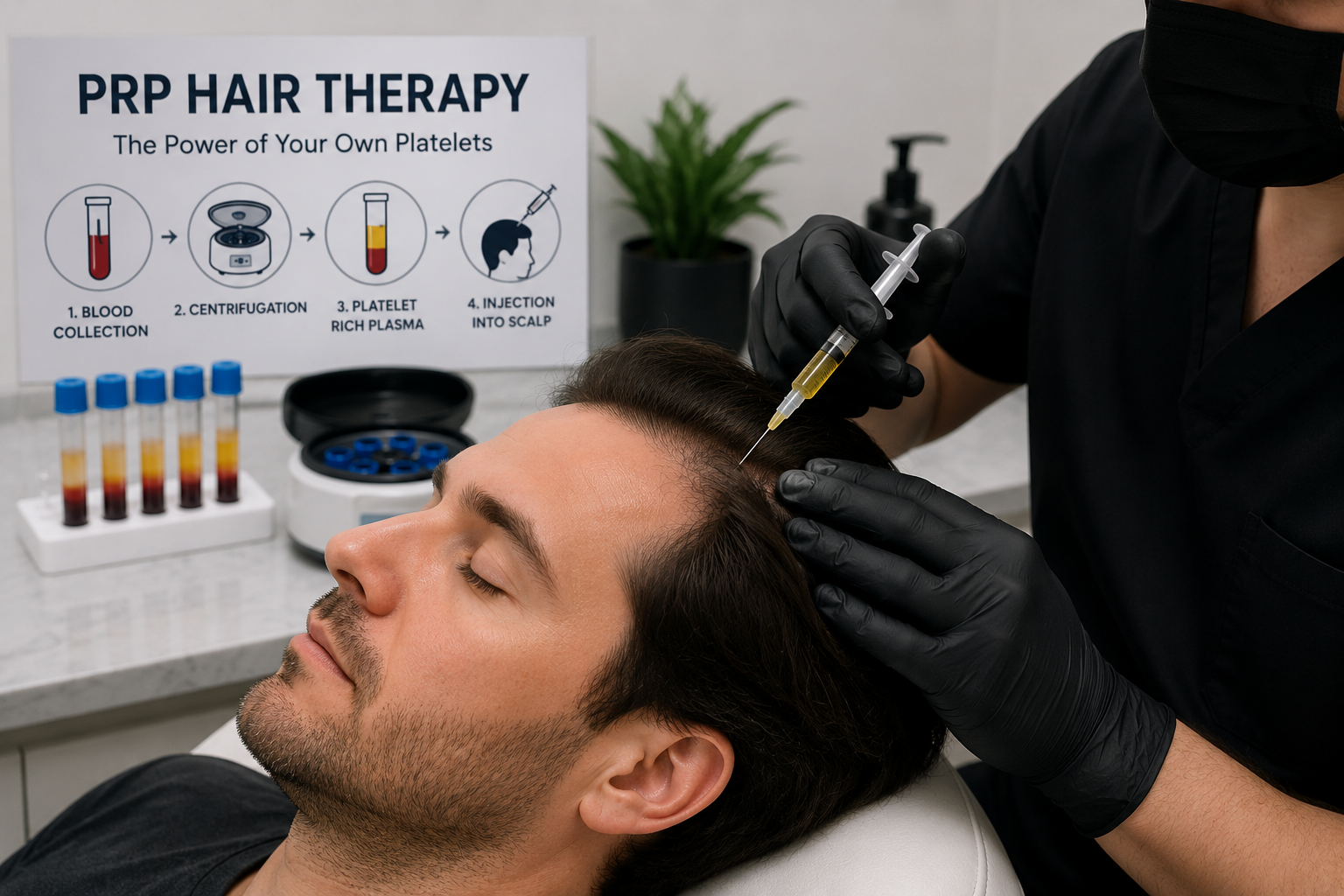
Quick answer: There is no universal PRP hair therapy cost. The number of sessions, treatment area, provider, preparation method, follow-up plan, and maintenance schedule can all change the total quote.
How Much Does PRP Hair Therapy Cost?
The most useful way to understand PRP hair therapy cost is to look at the full treatment plan. PRP, or platelet-rich plasma, is prepared from a patient’s own blood. The blood is processed to concentrate platelets in plasma, and the preparation is then used as part of a scalp treatment protocol.
Because hair-focused PRP is commonly planned as a series, a single-session quote may not represent the true financial commitment. One clinic may advertise the price of one visit, while another may quote an initial package. A third provider may include follow-up assessment or maintenance recommendations in the plan.
That does not mean one clinic is automatically better or worse. It means the quote needs context. Ask the provider how many sessions are recommended, how far apart they are scheduled, what follow-up is included, and whether maintenance sessions are expected later.
Compare total plans, not single-session ads. PRP hair therapy cost is easiest to understand when the clinic gives you the full recommended schedule in writing.
What Affects PRP Hair Therapy Cost?
Most PRP hair therapy cost differences come from the structure of the plan and the clinic providing the service. Common factors include:
- Number of sessions — an initial series costs more than one appointment, even if the per-session price looks reasonable.
- Scalp treatment area — a small focused area is not the same as treating a wider scalp region.
- Provider experience — physician-led clinics and aesthetic practices may structure fees differently.
- PRP preparation system — clinics may use different centrifuge systems, blood collection methods, or processing workflows.
- Consultation fee — some providers include evaluation in the package, while others charge separately.
- Medical history and lab review — some clinics evaluate contributing factors before recommending treatment.
- Follow-up visits — progress checks may or may not be included.
- Maintenance schedule — ongoing sessions can change the long-term cost.
- Bundled services — some clinics combine PRP with other hair-related products or procedures.
- Location and facility fees — pricing can differ by market and clinic setting.
Ask each clinic to separate the cost of the initial consultation, the procedure series, and any recommended maintenance. That makes the quote easier to compare.
Initial Series vs Maintenance Sessions
Many patients researching PRP hair therapy cost are really comparing two separate expenses: the initial series and the possible maintenance phase. These should be discussed separately.
An initial series is typically the first group of appointments recommended by the provider. The goal is to follow a planned schedule and then reassess. Maintenance sessions, if recommended, may occur later and may be priced separately.
Before starting, ask:
- How many sessions are in the initial series?
- How far apart are the sessions scheduled?
- Is the quote for one session or the full initial series?
- When is progress reassessed?
- Are maintenance sessions expected?
- How often are maintenance sessions usually recommended?
- Are maintenance visits priced the same as initial sessions?
This matters because two clinics can advertise similar single-session costs while recommending very different total plans.
What Is Included in a PRP Hair Therapy Quote?
A PRP hair therapy quote may include more than the injection procedure. It may also exclude important parts of the process. Ask for a written breakdown before paying.
Possible included or separate charges can include:
- Initial consultation
- Scalp evaluation
- Review of hair-loss history
- Blood draw
- PRP preparation
- Scalp injections
- Topical numbing or comfort measures
- Post-treatment instructions
- Follow-up assessment
- Photos or progress tracking
- Maintenance planning
- Additional hair-related therapies or products
If a clinic offers a package, ask what happens if you pause treatment, miss a session, or decide not to complete the full series. Refund and cancellation policies should be clear before treatment begins.
Best comparison method: Ask every clinic for the total recommended PRP hair therapy plan, including initial sessions, follow-up, and maintenance expectations.
Does Insurance Cover PRP Hair Therapy?
PRP hair therapy is commonly offered as an out-of-pocket service. Coverage depends on the procedure, medical indication, provider, and individual health plan, but cosmetic or elective hair-focused procedures are often not covered.
Do not rely on a clinic’s general statement that a service is “reimbursable” or “eligible.” Ask for the exact billing information and contact your insurer directly if you plan to submit a claim.
Also ask whether the consultation, lab testing, or medical evaluation is billed separately from the PRP procedure itself. A plan may treat those services differently from the hair-focused PRP treatment.
PRP Hair Therapy Cost vs Other Hair Treatment Costs
PRP hair therapy is one option people compare with medications, topical products, laser devices, and hair transplant procedures. The cost structure is different from each of those options.
Medications and topical products may involve ongoing monthly costs. Laser devices may require an upfront purchase. Hair transplant surgery is usually a larger procedural expense. PRP hair therapy often falls somewhere between a one-time product purchase and a surgical procedure because it may involve multiple sessions and possible maintenance.
The right comparison is not just “which one is cheapest.” Compare the total plan, time commitment, evidence for the proposed use, possible follow-up, and whether the provider is evaluating the underlying cause of hair loss.
For broader platelet-rich plasma pricing, see our PRP therapy cost guide. If you are comparing regenerative medicine procedures more generally, our stem cell therapy cost guide explains why treatment labels can be confusing.
How to Compare PRP Hair Therapy Cost Quotes
Use the same questions with every provider. That keeps the comparison focused on the actual plan rather than marketing language.
- Is the quote for one session or a full initial series?
- How many sessions are recommended?
- How far apart are sessions scheduled?
- What scalp areas are included?
- Is the consultation included?
- Are blood draw and PRP preparation included?
- Does the clinic use progress photos or follow-up assessments?
- Are maintenance sessions recommended?
- How are maintenance sessions priced?
- Are any products or add-on therapies included?
- What is the refund or cancellation policy?
- Who should be contacted if there are concerns after treatment?
If a provider cannot clearly explain the number of sessions and what is included, the quote is not ready to compare.
Questions to Ask Before Starting PRP Hair Therapy
Cost matters, but it should not be the only question. Ask how the provider determines whether PRP is appropriate and whether other causes of hair loss should be evaluated first.
Ask whether the clinic tracks progress, how long it typically waits before reassessing, and what criteria it uses to recommend continuing, changing, or stopping treatment. A clear plan should include expectations and limitations, not just a payment schedule.
Be cautious with guaranteed results, pressure to buy a package immediately, or before-and-after marketing that does not explain patient differences. A responsible provider should be able to discuss the procedure, the evidence, the limitations, and the cost structure without making unrealistic promises.
Frequently Asked Questions
How much does PRP hair therapy cost?
What affects PRP hair therapy cost?
Does insurance cover PRP hair therapy?
How many PRP hair sessions are usually recommended?
Is PRP hair therapy the same as a hair transplant?
Sources and Further Reading
- Johns Hopkins Medicine: Platelet-Rich Plasma Injections
- American Academy of Orthopaedic Surgeons: Platelet-Rich Plasma
- American Academy of Dermatology: Hair Loss Information